Best Vfr Flight Planning Software
Hi; I need your help/advice in purchasing a good Flight Planner for my needs. I have the following Payware Aircrafts. Quality Wings 757. Which I love and fly all the time since I can use the default FSX Flight planner. Easy, no SIDS and STARS to deal with and “out of date” Date Bases. PMDG (B737 NG & B474) which I seldom fly, since I can't use the default FSX Flight planner. And if you've not done so already, download the freeware Plan G from TA Software. It is the best VFR planner out there--and it's FREE!!! (but it would be nice to make a donation or buy one of Tim Arnot's books on Amazon). And the VFR-flight is good too, I use both. We make the best VFR flight-planning and navigation software in the world, and we can't wait to show it to you. The Queen's Awards for Enterprise We are proud winners of awards in both the Innovation and International Trade categories, and are the only company in our industry to have received such recognition.

FliteStar VFR and IFR are our PC-based flight planning software solutions for general aviation pilots. Created to simplify and automate the entire flight preparation process, FliteStar gives you more time to do what you really like to do – FLY! For Business and Corporate pilots,. Depiction of active Special Use Airspace. Depiction of TFRs. Ability to create custom flight chart themes.
Depiction of Restricted airspace. Profile view of flight route with weather and winds. Optimized routing based on winds and aircraft performance. Automatic avoidance of restricted and TFR airspace. Upload flight plans to GPS and FMS units (IFR and Corporate versions). Weight and Balance.
Rubber Band routing. U.S. Weather and U.S.
Flight Plan Filing through DUATS. Ability to add Raster VFR charts (additional cost). Fuel Stop Planning (IFR and Corporate versions). Worldwide Jeppesen weather (additional cost).
What's The Difference Between FliteStar VFR, IFR and Corporate? Compare features in the table below to see which version contains the features you need. Advanced: The Advanced Model (available in FliteStar Corporate only) allows for more complete cruise information, an unlimited number of cruise settings, and more than a simple linear climb and descent profile.
Dheera malayalam movie video songs free download. Dheera malayalam video songs download tamil movies free download, dheera malayalam video songs download hd video songs download, dheera malayalam video songs download download youtube video, dheera malayalam video songs download video songs download, dheera malayalam video songs download. By Geetha Arts. Download video Malayalam Movie Dheera Song Punnara Pedamane HD thumbnail Malayalam Movie Dheera Song Punnara Pedamane HD. Songs of dheera download youtube video, songs of dheera video songs download, songs of dheera tamil songs free download, hindi video song download,.
It can also accommodate override fuel flow settings. Basic: The Basic Model (which can be used in all versions of FliteStar) contains less detailed performance data. However in most cases it still provides highly accurate time and fuel burn results.
When information is entered into the basic model format, the FliteStar application interpolates or extrapolates additional data points for the given weight or performance settings. With 5 rows of information and three power settings available for each weight setting, the interpolation can be highly accurate but not optimal for all altitudes and flying conditions. Which Model is for You? One area in which a Basic model may excel is when detailed performance information needed for the advanced model format, is lacking. The calculations for the Basic model interpolates additional data points, however the Advanced model uses only the nearest entered data points without interpolation or extrapolation. If too many gaps exist in the data, the Advanced model could be less accurate than the Basic model.
Best Vfr Flight Planning Software
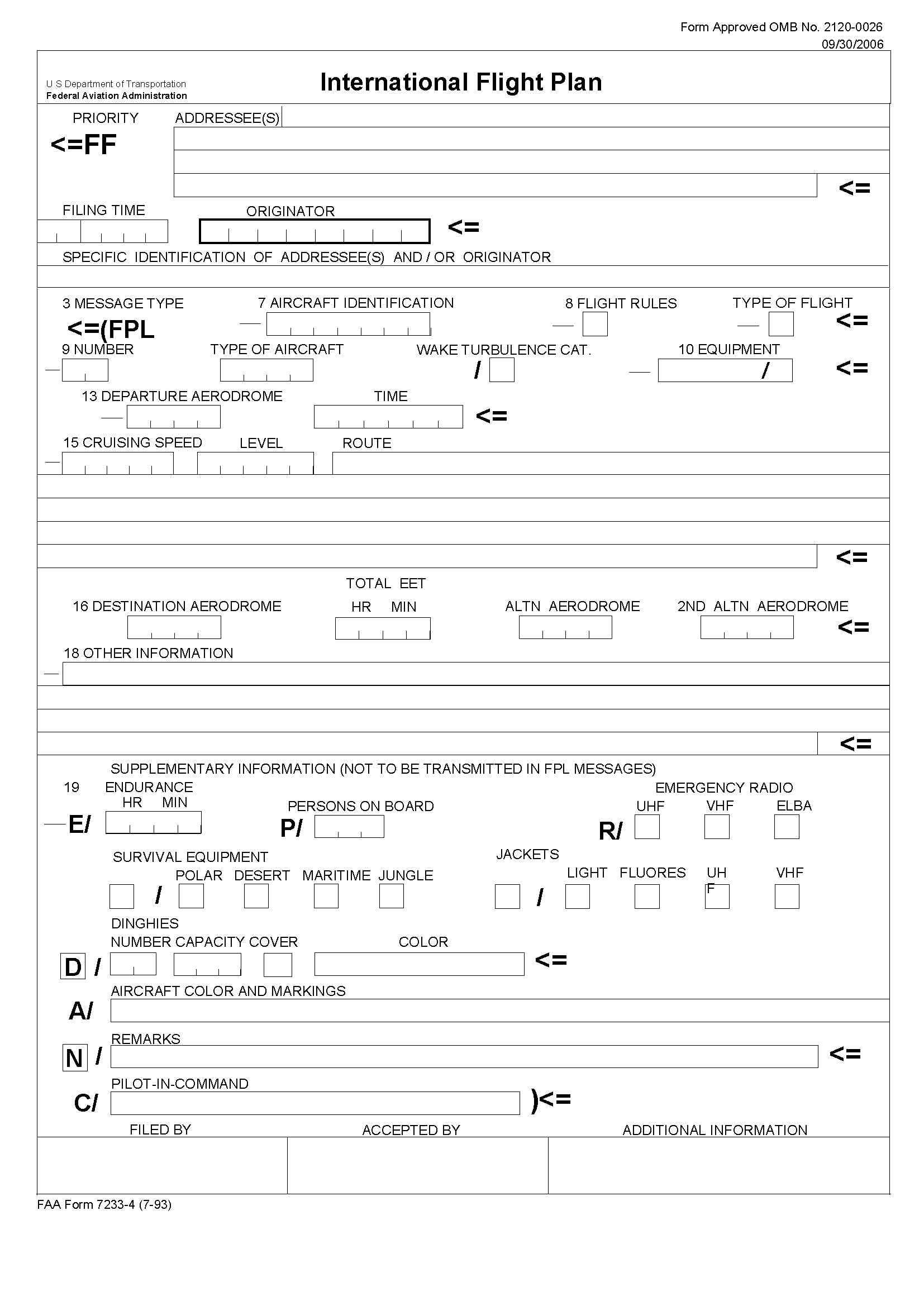
I want to get back and do some GA flying and had a few questions to ask the community: 1) In eal life do GA pilots (VFR) just get up in the air and fly with no specific flight plan in mind and just fly to sight see freelyand casually or do they have to plan it first? I'm assuming with VFR you have more flexibility and freedom to fly wherever you want and with IFR in GA you should create a flight plan first if I'm not mistaken. 2) How does one properly create a flight plan for VFR/IFR flying in a GA aircraft such as Cessna 172/182, RealAir Legacy. Can you use PFPX? If so do you guys manually create the route yourself, or let PFPX create the route for you? I'm assuming that in PFPX you would select LOW airspace when finding a route? 3) Most GA planes have Garmin units such as GNS, GTN.
I'll be using mostly Flight1's GTN 750/650 units. Even if I used a flight planning app such as PFPX, I would still have to manually input the data into the GTN unit myself since you cannot load P3D.pln files if I'm not mistaken. 4) Does the GTN 750/650 units support SID/STAR and ILS approaches like a 777 or Airbus would? Are these units capable of capturing localizers and glideslopes?
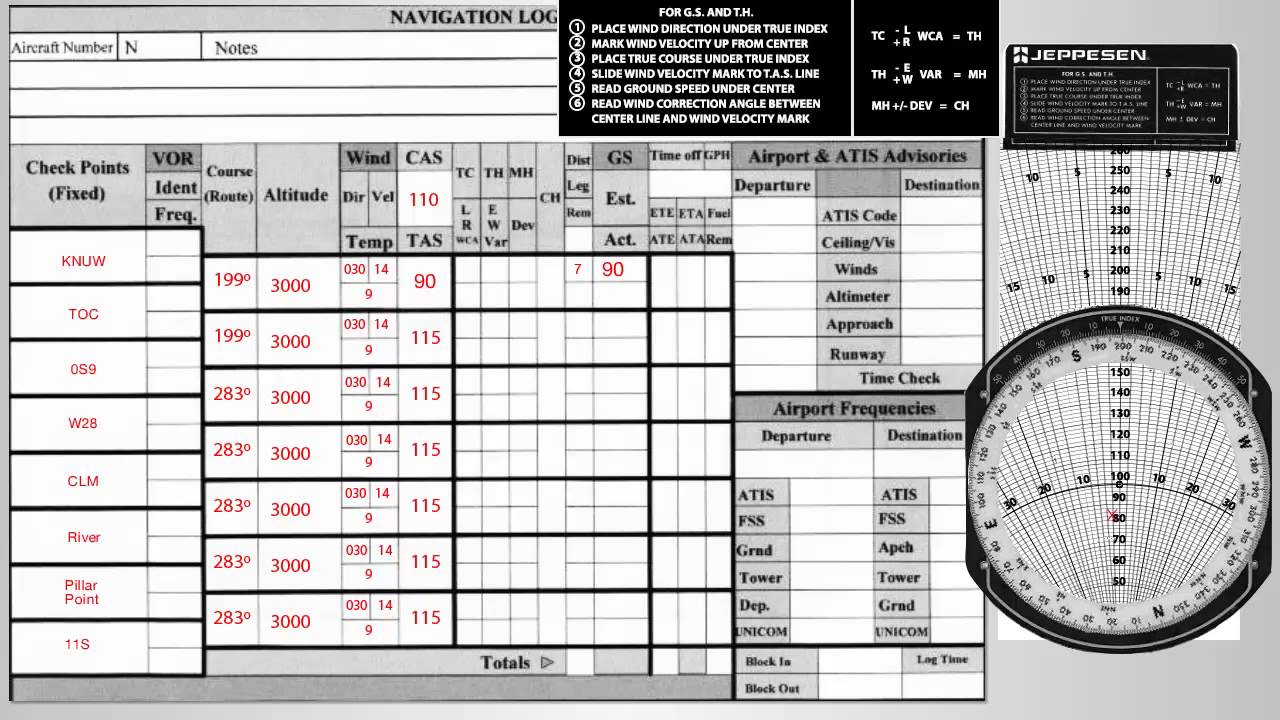
5) I've heard that the GTN 750/650 doesn't support VNAV capabilities, so how will we know optimal altitude to fly at for any given part of the flight plan? 6) VFR GA pilots usually fly at altutudes at least 3000 AGL depending on the terrain, and IFR GA pilots fly at much higher altitudes, perhaps above 10,000 feet but below FL180, correct?
I don't want to assume you are in the US, where VFR and uncontrolled flight is common. It is not so in most parts of the world. VFR flights should have a plan, required fuel, destination runway info, weather, etc.
The plan is not required to be filed with the FAA but if you are low time pilot I think it is a good idea. I usually don't file but I usually have ATC in my hear using traffic advisory service. Flight planning in a light GA plane is easy., once you've done it a few times. The main thing to calculate is you estimate time enroute and fuel as far as route planning goes, no need for PFPX just use the fuel burn and speed tables in the POH. Using a Garmin is pretty common now, but the plans do need to be manually loaded, at least the first time. SID/STARS in general do not apply to GA flying because we stay away from the big busy airline hubs.
When you are 7500 ft in the air you really don't need VNAV, although the Garmin will give you an assist if you tell it how what your desired descent rate is going to be. For VFR, 7500 ft is usually the best depending on wind and your heading because at that altitude a normally aspirated engine has cruise power at full throttle. IFR altitudes are full thousands. Ie 6000 8000 You should download the Airman Information Manual free from the FAA here (the AIM is a bible for student pilots). Wow, thanks for all the information everyone.
Dan what you mentioned about flying GA makes sense to me, now I have a better understanding of it. And those flight planning tools for VFR seems to be very well suited for GA flying vs tubeliners. I will check them both out to see which one is good.
So basically when planning for VFR flights, I just look at the map and select all the points I want and it will automatically make a flight plan/path for me for which I can enter into my Garmin G1000, GTN 750, 650, 530, 430, etc? If PFPX is the flagship planning software for IFR and tubeliners, then what's the equivalent for GA and VFR flying? Is there a paid software out there that's really good? With VFR planning (for A to B flights) is more about fuel planning, looking at the weather, figuring out which VORs you are going to use (unless you use a GPS), taking note of the runways at your destination, (checking airspaces if you want to go realistic) etc. Then the exact route. Routes are less important then with airliners. Usually no one will yell at you when you decide to fly left or right somewhere.
There is no need to fly specific routes and cross specific waypoints and use specific airways. I myself usually create simple A to B plans which also saves a lot of time when you have to enter them into the GNS manually.
(BTW I am currently flying with VOR only, no GPS.) And whenever I see something interesting somewhere in the distance I simply go there (fuel permitting, but I usually load enough fuel for a few flights, like I do with my car. It's my own private plane so.). To me VFR stands for Visual Freedom Rules. Loosen up a little and forget all those strict airliner rules! You can create plans with loads of points but be sure to choose 'points' which can be entered into your GNS. IMHO Plan-G is the VFR flagship, even though it is free.
No need for paid software. Don't even know if there are any paid VFR planners. I myself mainly use it to pick a destination and checking freqs, runways and VORs during the planning phase. I don't use it during a flight. If you want to you can create standard pln files that can be loaded into P3D. You can create 'tourist routes' following rivers or valleys very easily by clicking and dragging, creating non existing waypoint on the fly or by clicking on VORs, NDBs or whatever. It really is payware quality!
Concerning altitudes: if you want to do it realistic you should look up specific information for the country you are flying in. Usually VFR is flown at #500 feet, as posted above, but it may also depend on the direction you are flying. I mainly fly in Norway and when the magnetic track is between 0 and 179 degrees VFR altitudes are 3500, 5500, 7500 etc.
While between 180 and 359 it is 4500, 6500, 8500 etc. Obviously in the sim no one will mind if you fly at other altitudes just like no one cares about airspaces.
I mostly fly at 7500 feet in any direction, sometimes 8500 when I know I am will be flying near the highest mountains in Norway. Thanks J, yes flying GA VFR is very relaxing to me. I want to do more of it now. Need a break from flying long haul flights on commercial planes anyways. I plan to fly with my Garmin GTN units. I just love using GPS when flying because I love technology and gadgets, and that's good to know that you can have more freedom when doing VFR flights.
That's exactly what I'm looking for. Since you guys have both mentioned about Plan-G being the premier VFR flight planning tool, I will check them out. But I have found this app here called QuickPlan for $25. Do you guys know anything about this product or have experience with it? There's even a review from AVSIM about this so it must be pretty good as well.
Vfr Flight Planning Online
Not sure how it stacks up to Plan-G. As for your question about Glideslope capture for GTN units, you will find that ever more airports have RNAV (GPS) approaches. So when you select the approach into the airport, look for both ILS and RNAV options and choose what you like better. Personally, I like RNAV approaches because you can stay in GPS mode all the way and do not have to worry about ILS frequencies. If the approach has LPV capability, the GTN will steer the glidepath as well as the localizer, much like a traditional ILS landing.
Really slick B). As for your question about Glideslope capture for GTN units, you will find that ever more airports have RNAV (GPS) approaches. So when you select the approach into the airport, look for both ILS and RNAV options and choose what you like better. Personally, I like RNAV approaches because you can stay in GPS mode all the way and do not have to worry about ILS frequencies. If the approach has LPV capability, the GTN will steer the glidepath as well as the localizer, much like a traditional ILS landing. Really slick B) Just have to make sure it is an LPV approach, otherwise it's like a localizer approach with no vertical guidance. Can Plan-G be used on a network envirionment and can it be updated with navigraph data?
Plan-G absolutely can be used online. It doesn't have a Navigraph update, it reads data directly out of your sim, but remember that Navigraph, ILS approaches, RNAV etc are fundamentally IFR procedures and resources that do not really apply to VFR flight. In VFR flight you are primarily flying and navigating by looking out of the window. GPS etc is great, but you should be able to turn it off and do without it. Plan your flight with reference to good visual turning points that you can identify on the ground and by all means put them in the GPS, follow it and use it to stay out of controlled airspace, but you're not really going to be planning using IFR reporting points - they are largely irrelevant. Edit to add: in terms of altitude selection, to be honest VFR in a typical spam can the concept of 'optimum altitude' doesn't really come in to the equation. As for your question about Glideslope capture for GTN units, you will find that ever more airports have RNAV (GPS) approaches.
Vfr Flight Planner
So when you select the approach into the airport, look for both ILS and RNAV options and choose what you like better. Personally, I like RNAV approaches because you can stay in GPS mode all the way and do not have to worry about ILS frequencies. If the approach has LPV capability, the GTN will steer the glidepath as well as the localizer, much like a traditional ILS landing. Really slick B) So the only difference between RNAV and LPV approaches are that with RNAV I can have the unit in GPS mode at all times?
But do RNAV approaches support vertical and horizontal steering like the LPV approaches?